
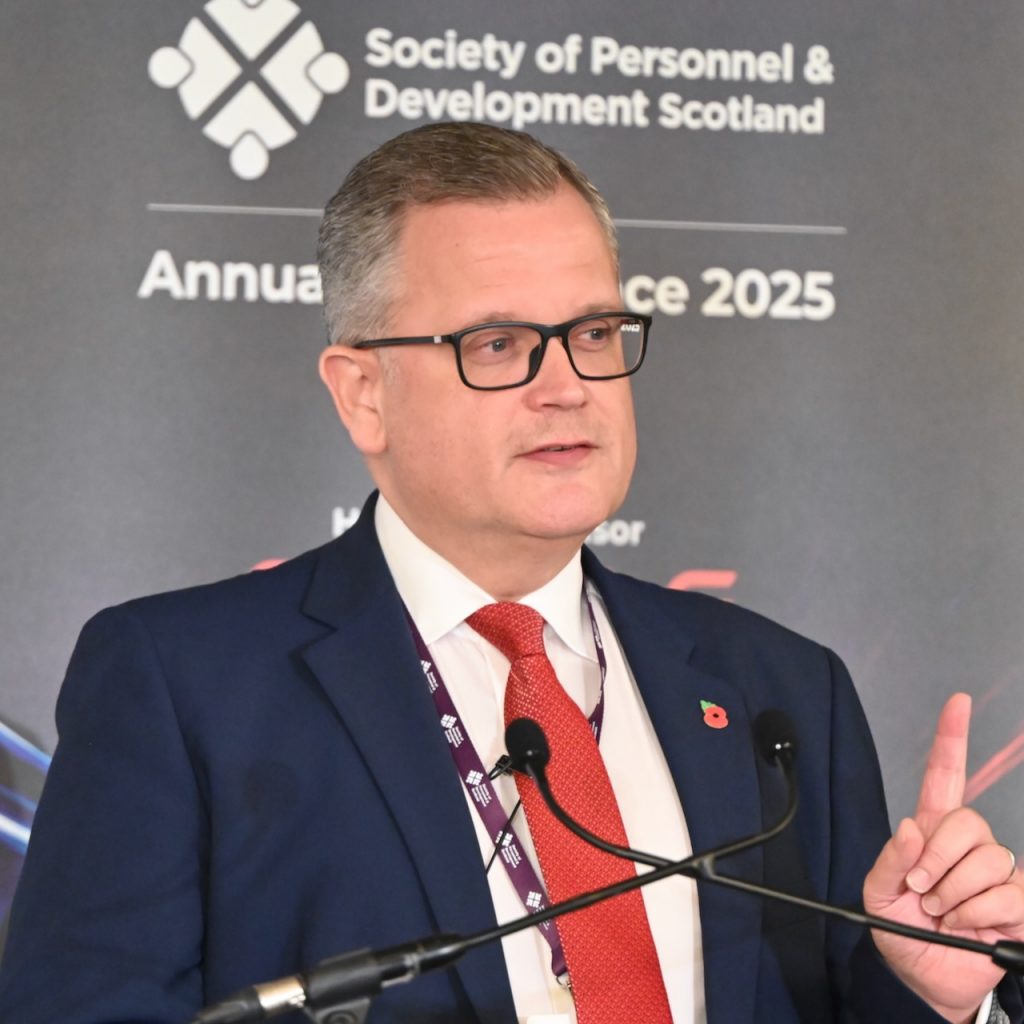
Stephen Moir is an inspirational example of an HR leader who has moved into a broader leadership role, stepping up from chief people officer to chief executive. With a background in HR leadership in public service organisations including policing, the NHS and City of Edinburgh Council, Moir is currently chief executive at Cambridgeshire County Council.
His passion for the people profession and expertise in leading change and transformation in the public sector made him the ideal person to open this year’s SPDS Annual Conference, with a keynote focusing on the evolving role for HR in a rapidly changing world. Reflecting on HR’s reputation and credibility issue in some areas, Moir urged the audience to celebrate and talk openly about the impact they have in their organisations as HR leaders. “In a period of public service reform, reputation and credibility matters,” he said.
With that in mind, he shared three critical things he as CEO wants from his HR team, as well as one major thing the HR team should expect in return…
1. Someone to trust, and who challenges where necessary
“I need somebody I can trust [leading HR],” Moir said. “Somebody who will provide me confidential and safe advice as the chief executive, who is willing to speak truth to power and who has got a focus on providing organisational integrity and ensuring everything we do is aligned with the purpose or vision of our council.”
In Cambridge’s case, that vision is based around creating a greener, fairer and more caring Cambridgeshire. “Everything we do and the values of our organisation are aligned behind that,” Moir explained, adding that includes everything delivered by the people and culture function. “Greener, fairer and more caring applies inside the organisation as much as it does outside,” he added.
2. Lead change
Leading and owning change rather than merely supporting or enabling it is the second thing Moir wants to see from his HR leadership team. His service director of people and culture chairs the council’s Target Operating Model board. It is a top-to-bottom organisation redesign that is about alignment as much as savings, Moir explained.
“It’s about having the organisation structured around how are we going to deliver the ambitions our members have set,” he said. “It is taking cost out, but it’s also changing the way we work and bringing things together.” That means HR must play a leading role, empowered by the chief exec to lead that change.
One core challenge to overcome here is change fatigue, Moir added, which can be particularly pronounced in an ageing and long-serving workforce who have seen a lot of change come and go. “It’s no wonder they are fatigued by change, but having that as the constant response from your organisation is not tenable as it will lead to poor productivity, poor outcomes for residents and organisational atrophy,” he warned. Avoiding that leads us neatly onto Moir’s third expectation of HR…
3. Build positive and engaged cultures
Moir expects HR leaders to “help build positive and engaged cultures where people care, but also feel cared for”. “How people feel about their work really matters,” he said, adding that when people aren’t engaged, standards of service delivery tends to slip.
He quoted Peter Drucker’s famous phrase that ‘culture eats strategy for breakfast’, adding: “You can have the most beautifully written strategy, but at some point it’s going to sit on a shelf gathering dust. It’s how people work on a day-to-day basis and how they interact with each other and the public that really matters.”
Creating a sense of psychological safety and belonging is key to this, and Moir stressed the importance of continuing to invest in areas like wellbeing, inclusion and learning and development. Cambridgeshire County Council has received a number of accolades including Disability Confidence Leader Status, a Gold Award from the 5% Club for investing in employee training and accreditations for being a Carer-Friendly and Menopause-Friendly Employer.
“It’s not about the badges, but they make a difference in terms of recruitment and retention,” Moir added. “People are really proud of an organisation that goes out of its way to care for them and think about them as individuals.”
What HR should expect from CEOs
Ultimately, Moir reflected, leadership is all about the people, and a recognition of this fact is something HR should expect to see from their CEO. “Leadership belongs to everybody. It’s not about role, it’s about person. It’s about relationships, collaboration, trust,” he said. The word CEO, he added, could stand for ‘Chief Engagement Officer’ as much as ‘Chief Executive Officer’.
He added that CEOs should be visibly committed to the organisation and its people, understanding that change and delivering better outcomes through people. “If your chief executive is the type that sits in their office with the door shut all day long, they’re going to struggle with public sector reform,” he said, adding that he doesn’t have an office and values getting out with frontline staff and into local communities.
HR needs to evolve
Moir closed his session by urging HR leaders to embrace technology, rather than leaving it in the hands of technologists. “Technology can transform public services, but it shouldn’t be led by technologists,” he said. “Embracing technology is the job of the whole organisation. It’s about using technology to deliver better outcomes, better services, to change the way we work, to make savings, to be more effective.” HR should take some ownership of that, he added.
Ultimately, he concluded, HR has an exciting opportunity to step up in leading organisational transformation. “Public service reform might sound scary, but if you take ownership of it, if you’re putting yourselves into a leadership role, if you’re prepared to push your chief executives and leadership teams, there’s no reason it can’t deliver better outcomes and be better for people, residents or colleagues,” he said. “And if not you [leading it], then who?”
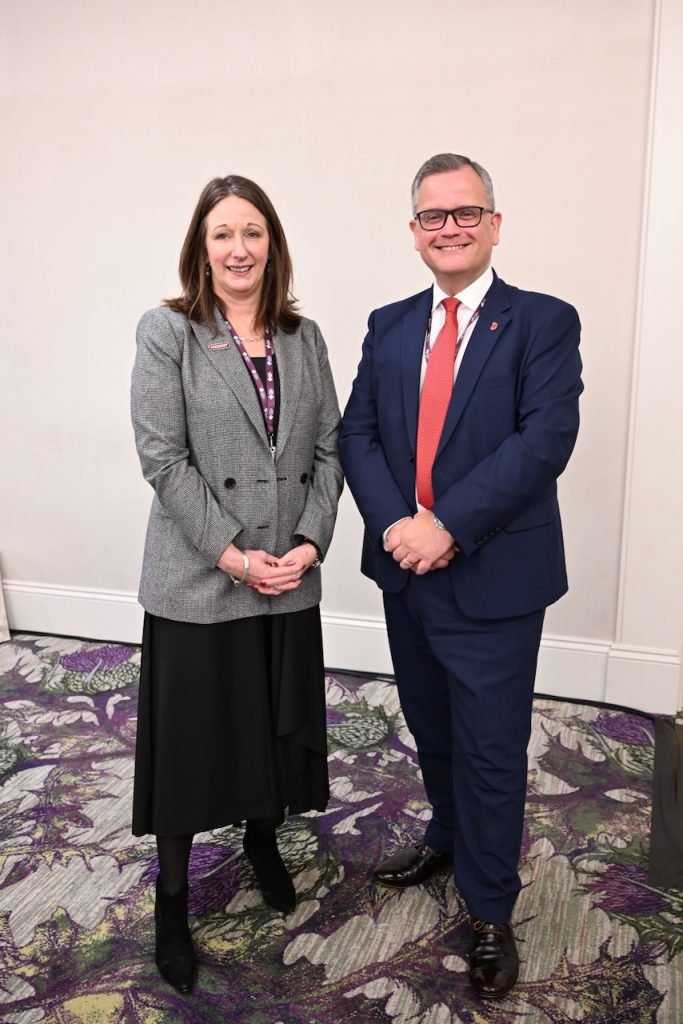
Stephen with SPDS President, Fiona Whittaker
Blog by Katie Jacobs, an award-winning freelance journalist, writer and editor, who specialises in writing about the world of work. She was previously Editor of HR Magazine and Senior Stakeholder Lead at the CIPD.
0 Comments