
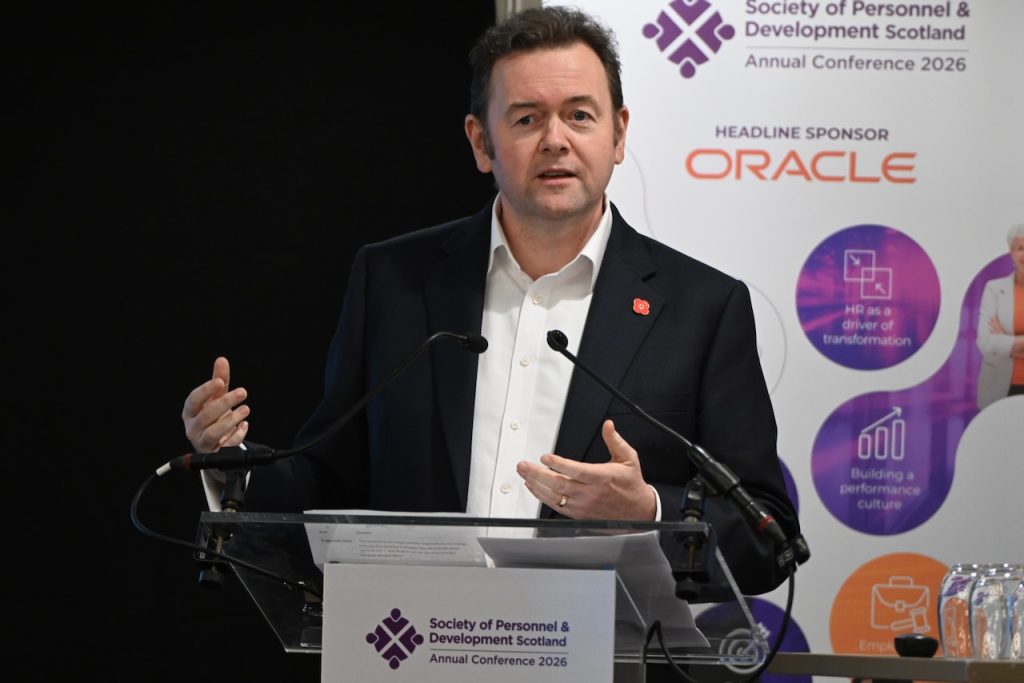
Neil Carberry, the new Chief Executive of the CIPD, was just six weeks into the role when he joined delegates at the SPDS Conference to talk about how the people profession can meet the challenge of Scottish Government reform, and share his initial thoughts on how the CIPD will change under his leadership.
Previously Chief Executive of the Recruitment and Employment Confederation (REC), and having spent more than a decade running employment policy for the CBI, Carberry arrived fresh from the CIPD’s Annual Conference, where he shared that he had been running multiple listening sessions in his quest to make the CIPD “relentless useful” to its members.
In his closing keynote and Q&A, Carberry was clear that the role of HR is to deliver performance for the organisations it works for. “Performance is the thing that helps us create opportunities for the people we work with, deliver great outcomes for the citizens we serve and deliver stronger social and economic outcomes for Scotland and the wider United Kingdom,” he said. “There’s a moral imperative to getting this right.”
He added that performance should be “done with people”, rather than “extracted” from them, referencing the CIPD’s origin as the Workers’ Welfare Association more than a century ago. And he reflected that workforce capability is what makes strategy deliverable, a point which comes into sharper focus in the age of AI and during times of change and uncertainty.
With reform on the horizon for Scottish local government, Carberry warned that there is a risk of “decisions [being] made without us”, which might result in a different shaped sector, but not necessarily a more effective one that “creates great careers for people in public sector and delivers fantastic services for citizens”. Achieving that outcome requires HR professionals to step up and “demonstrate our impact”, speaking in the language that political and business leaders understand.
“Investing in the means of delivery matters,” he added. “Investing in skills matters. You cannot demand better performance while reducing the ability of the organisation to effectively manage the workforce.” That includes working constructively with employees and trade unions.
“It feels uncomfortable right now,” he acknowledged of the change to come. “But one of the great skills of HR is to sit with discomfort and work out how we make something positive out of it… There’s an opportunity for us to shape the future, and we should lean into it with alacrity.”
A fresh approach for the CIPD
On the direction he wants to take the CIPD in under his leadership, it is early days – and Carberry was clear that listening comes first. But to him the purpose is clear: “We are about helping you create workplaces that perform.” That means everything coming out of the CIPD should “feel like it’s relevant to what you’re going to do on a Monday morning”, and delivered through better segmentation of resources and messaging.
He was blunt that the changes to how the CIPD is resourced to support members in Scotland had been “slightly wrong” and assured the audience that the CIPD in Scotland team will be properly resourced over the coming months.
The Profession Map is also due a refresh, with Carberry planning a “sharp and quick reinvention”, with member input, over the next six to nine months. “We have an opportunity to build something that takes our profession into the next decade and in a position to take that seat at the boardroom table,” he said. “We as a profession need bravery and boldness in the value we deliver, couched in language that our customer groups understand.”
While he acknowledged the need for change and welcomed challenging feedback from members “as a gift”, Carberry added that transformation will take time. “The board and the leadership of the CIPD are committed to making the sort of professional body that will be as relevant in 2030 as what the original founders built in 1920,” he said.
And he added that he welcomed further thoughts and feedback from members of the CIPD and wider HR profession, joking that he is “really easy to find”.
“I am really interested in what you think your professional body should be doing, because it is your professional body,” Carberry concluded. “It is ‘we and us’.”
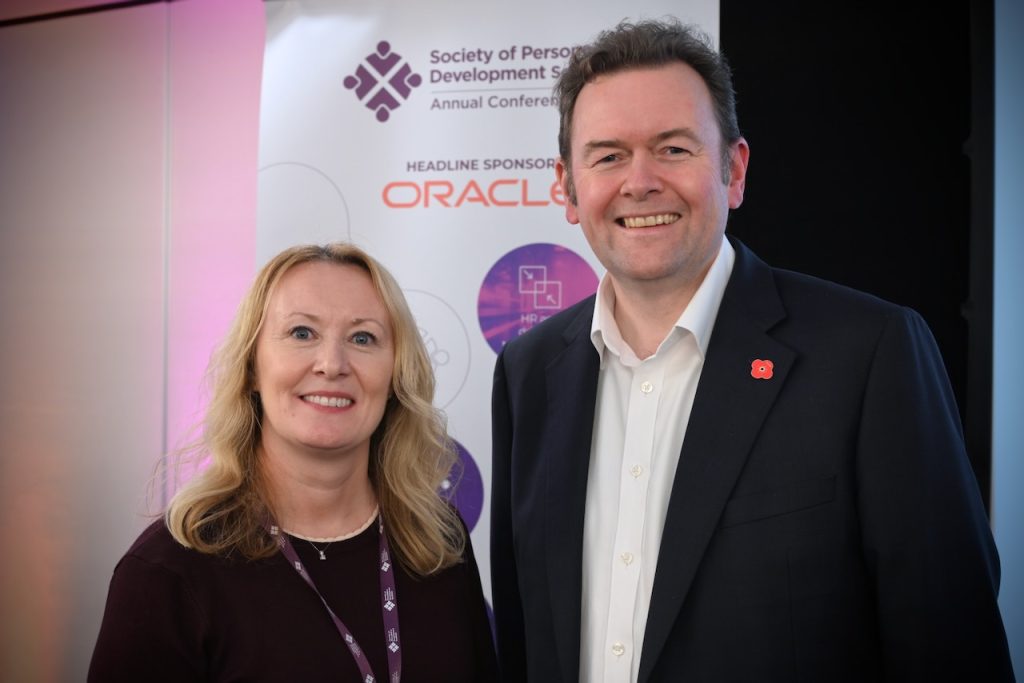
SPDS Vice President, Kath McCormack, with CIPD Chief Executive, Neil Carberry
Pictures by Stuart Bain
Blog by Katie Jacobs, an award-winning freelance journalist, writer and editor, who specialises in writing about the world of work. She was previously Editor of HR Magazine and Senior Stakeholder Lead at the CIPD.
0 Comments