
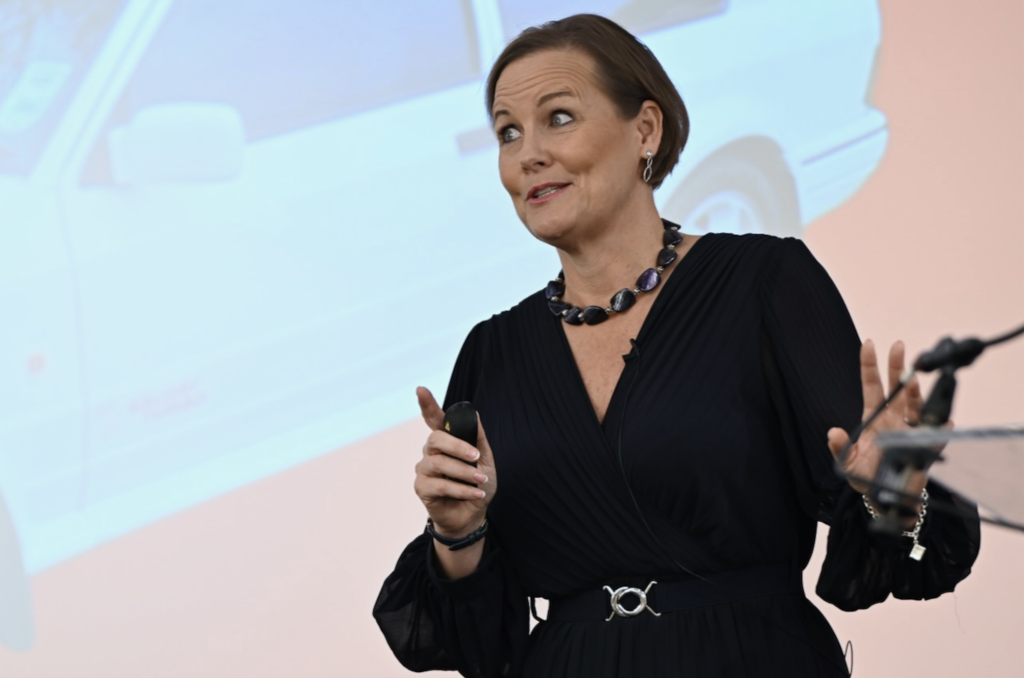
Jo Wright is frank that when she first became a manager, she was a “sh*t” one. “I was a nice manager, but a sh*t one nonetheless,” she told the SPDS Annual Conference. “I literally had no boundaries. I did everything for everybody. I was a people pleaser. I wanted people to like me.”
In a lively and practical session, Wright, the author of best-selling book ‘No More Sh*t Managers’, shared her personal journey from sh*t manager to a transformational one, explaining how a coaching style can transform everyday workplace conversations, building confidence and improving performance. Here are her three top tips for building a coaching culture in your organisation.
1. Ask more, tell less
Wright recalled how in her first manager role, she felt she had to have all the answers. “The more questions that came at me, the more valuable I felt,” she said. “I was the manager, I was supposed to have all the answers.” But, she reflected: “There was only one loser in that game, and that loser was me.”
Two experiences taught her the power in asking over answering. One was when, having failed to solve a problem alone, she finally asked her more experienced team member for his advice. He solved it quickly. Another was being told by her own “great” manager that: “The best people ask the best questions. You need to ask more and tell less.” She began to ask, listen, trust and empower her team, and was “paid back tenfold”.
2. Small changes have the greatest impact
According to the Global Workforce Institute Survey 2024, 69% of people say that their manager has the same impact on their mental health as their spouse. It’s a powerful stat that proves just how impactful managers are on their people. So, making changes to how managers talk with their teams can have a profound impact.
Wright shared how her best manager noticed how she had been struggling with things outside of work, asking: “How are you really?” This listening approach made her feel “seen, heard and valued”, like he saw her as a human being, not just an employee.
She gave another example of a team member who was brilliant at her job, but outside of work it seemed as though “her life was in constant chaos.” In meetings, Wright switched to asking about her life outside of life first, before moving onto work. “Once you had a little talk about that, she could relax and focus on talking about the task in hand. That small shift had the biggest impact on how we as a team worked.”
This is an example of moving from transactional conversations that purely focus on getting the job done to “transformational conversations” where managers “get to know the person behind the task”, working towards “winning hearts and minds”.
3. A coaching culture happens one conversation at a time
“Coaching conversations make more of our everyday conversations transformational,” said Wright. She defined a coaching conversation as one “where we ask more and tell less”. And she believes that coaching is a bit like cooking: “Everybody should have some level of cooking capability, but not everybody needs to be a professional chef… Everybody should be able to have a coaching conversation, but you don’t have to be a professional coach.”
Where even one coaching conversation happens, the result can be “magical, transformational, nurturing, empowering”. Building a coaching culture where everyone is having those conversation compounds the positive impact. “A coaching culture is a place where authentic leaders help people to grow, thrive and perform through effective conversations and honest feedback, underpinned by trust,” Wright explained.
She added that taking such an approach isn’t “fluffy”. “It’s about performance and improving results. It means challenge as well as support.” And it’s not about adding extra work. “Everyone is having conversations,” she pointed out. “It’s about how do we make them transformational conversations where we ask more and tell less, focus on the who, and then get the tasks done. A coaching culture happens one conversation at a time.”
View Jo’s presentation here
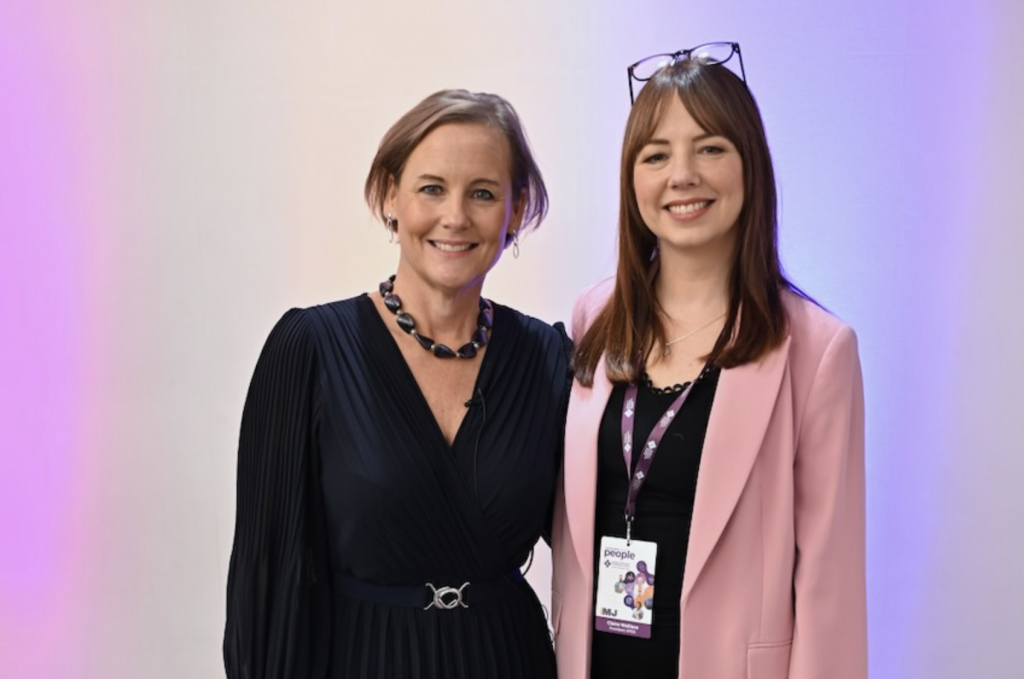
Jo Wright with SPDS President, Claire Wallace
Photos by Stuart Bain
Blog by Katie Jacobs, an award-winning freelance journalist, writer and editor, who specialises in writing about the world of work. She was previously Editor of HR Magazine and Senior Stakeholder Lead at the CIPD.
0 Comments