
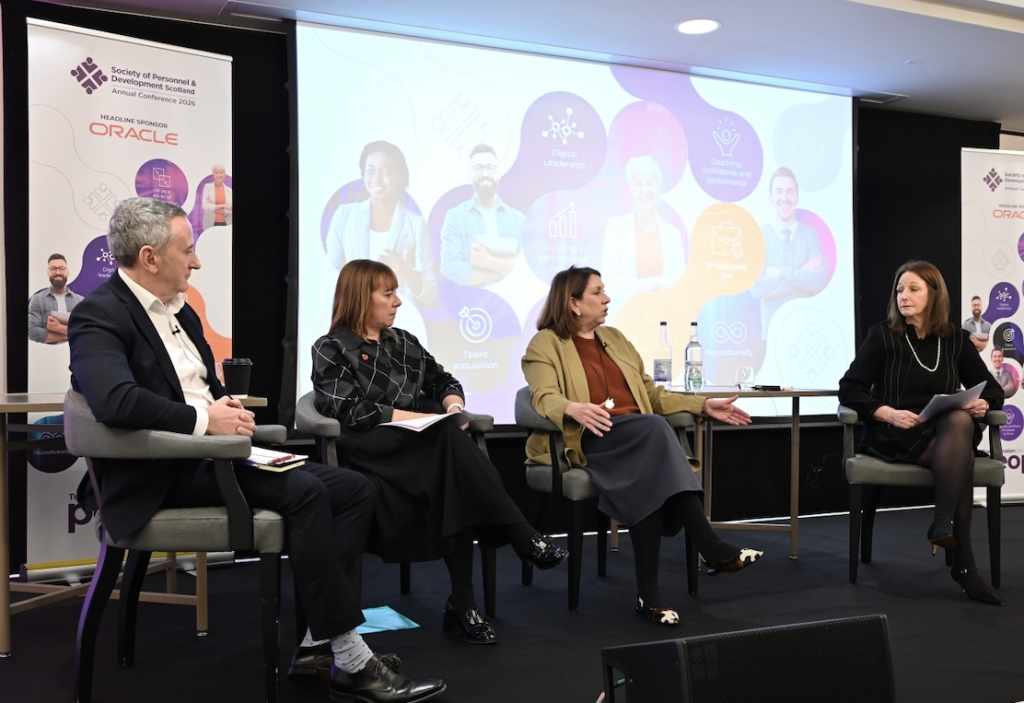
The Scottish Government proposals for local government reform look set to reshape the future of councils, their services and the people who deliver them. To explore what this significant change means for local government workforces in Scotland, SPDS delegates heard from a CEO panel on how they and their teams are responding to the challenges and opportunities ahead.
Panel chair Fiona Whittaker, Chief Officer, People Resources at North Lanarkshire Council, was joined by Thomas Glen, Chief Executive of Perth and Kinross Council, Pippa Milne, Chief Executive of Argyll and Bute Council, and COSLA Chief Executive Jane O’Donnell.
Here are eight things the audience learned from a transparent discussion about local government transformation.
1. Lead with honesty and authenticity
The panel were frank about the challenges presented by public sector reform. “This is a really challenging time for us as local government collectively and as individual councils,” said Glen. He added that leaders are asking people to follow them when “we don’t have all of the answers”. But the panellists agreed that honesty, transparency and authentic leadership matter more than ever as executive teams and workforces find a way through the coming change. “This is a juggernaut; it’s going to move fast and it’s going to feel difficult,” said O’Donnell. “A challenge we’re all going to share is how we maintain professionalism, focusing on the important things and making sure we’re the leader people want us to be: listening, humble and in service to them.”
2. Focus on the why
During times of uncertainty, when the final destination is as yet unknown, purpose is a powerful anchor. “As public servants we are driven by public service,” said Glen. “We keep coming back to the why, and trying to keep that message alive when people are quite nervous.” O’Donnell added that leaders cannot forget the two reasons why local councils exist: “The people in our communities that we are here to serve and the people who deliver those services.” Place matters too, Milne added. “Local government is a convening force of place,” she said. “We’re the only public, democratic bodies that have place at the heart of it.”
3. Work out where you have agency
O’Donnell reminded the room that “we have been here before”, citing the example of previous attempts to move education and the National Care Service out of local authorities, which were seen off by resistance from councils, professional associations, unions and partners acting together. Milne added: “We need to be focused on where we can have some agency. ” However, this doesn’t mean resistance for the sake of it. The panel acknowledged that some change is necessary and that the sector needs to work on developing credible alternative suggestions rather than simply saying ‘no’ to everything.
4. Consider capability and commitment as much as capacity
While capacity often tends to dominate conversations, leaders should also look honestly at capability and commitment, explained Glen. “HR has got an incredibly important role supporting leaders with that capability piece,” he said. Much of that is around leadership capability and commitment to sitting in “that difficult strategic space”, he added. “It’s easy to get drawn back into operational, administrative, political spaces… as leaders, how much time are we prepared to commit to looking at transformation, change and strategy? One of the biggest challenges is getting that capacity, capability and commitment balance right as leaders.”
5. Be mindful of wellbeing
Milne offered a warning around wellbeing during times of change, telling delegates to drop the outdated “just get a bigger plate” mantra. “At some point, people break,” she said. “We need to be mindful of that.” Prioritisation skills and phasing work appropriately will be vital, and can matter more than capacity. And she pointed out that local government colleagues have already shown that they can deliver major change – through austerity and the pandemic, for example.
6. Articulate the story
Storytelling is a core component of successful change, but as yet public sector reform lacks a clear compelling story, said Glen. “We talk about getting on board [the bus], but there’s still a lack of clarity about where we are going and why it’s going to be better.” To help people decide whether they are on board, a clear narrative will be critical. “If we are going to help people, we need to help them understand and shape the story,” Glen added. “And let them see themselves in it. Otherwise, why would they bother?”
7. Build relationships with elected members
O’Donnell encouraged delegates to build relationships and trust with elected members at a local level. “Our elected members will be the answer as to whether we end up finding a deal with government or whether we’re going into battle in Parliament,” she said. “You have to care for them like you have to care for your employees. That relationship is really important.”
8. HR must play a leading role
The people side of change is as important as the strategic vision and process and systems side of change. That includes engaging across the workforce, from squeezed middle managers to frontline teams, and building strong relationships with unions. Reflecting on previous experiences of successfully delivering change, Milne said: “We would never have been able to do what we did if we didn’t have that level of focus on people and what was needed to take them with us.” That makes the role of HR in the years ahead absolutely central. As O’Donnell told delegates: “You’re the heart of what we’re doing. We need you.”
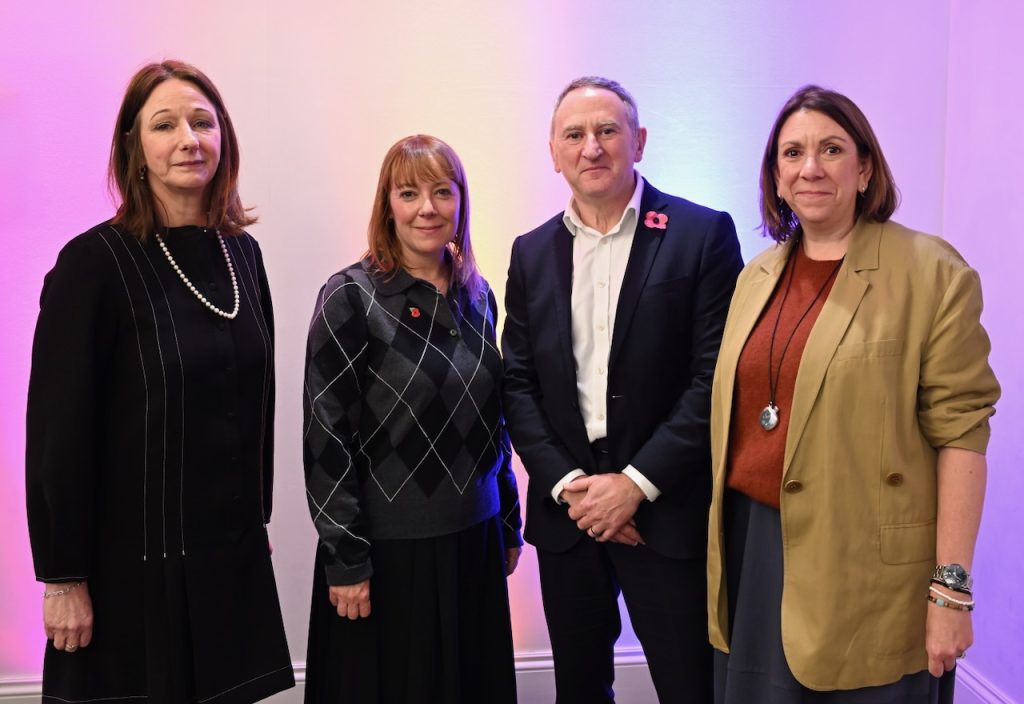
Left to right: Fiona Whittaker with Jane O’Donnell, Thomas Glen and Pippa Milne
Pictures by Stuart Bain
Blog by Katie Jacobs, an award-winning freelance journalist, writer and editor, who specialises in writing about the world of work. She was previously Editor of HR Magazine and Senior Stakeholder Lead at the CIPD.
0 Comments