
Anyone working in HR is sure to have heard the oft-quoted statistic that between 50 and 70% of organisational change fails to achieve its intended outcomes. Is that because how we tend to approach change is part of the problem? While organisational change is often sold to managers and HR professionals as something to be managed, led and controlled as an end-to-end, linear process, the truth is that landing successful change in organisations is a far messier, more human process.
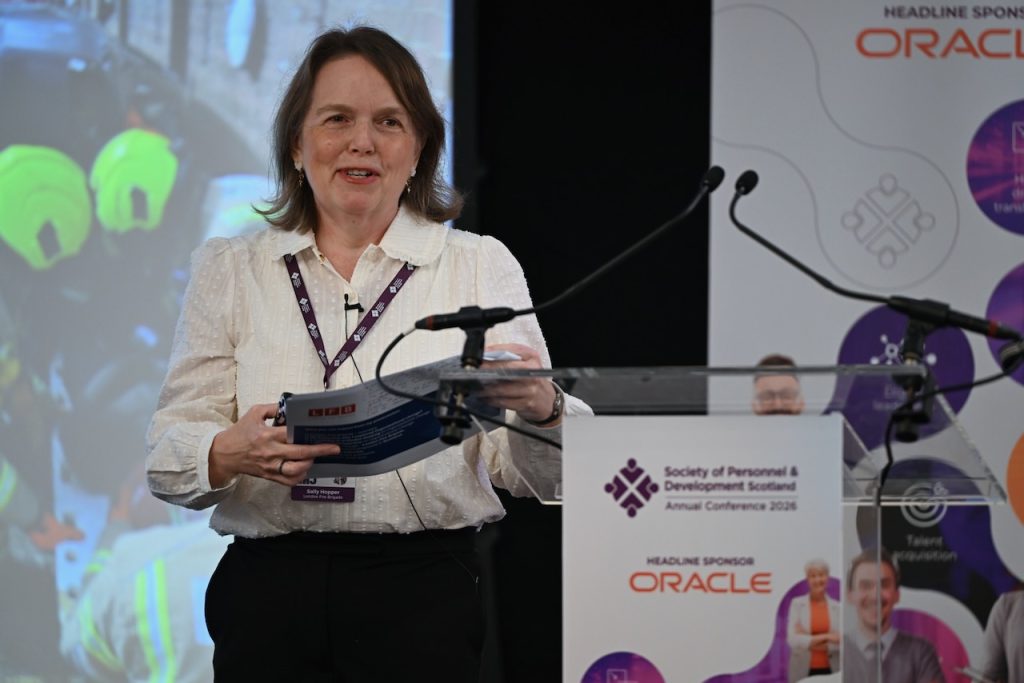
That’s the message Sally Hopper, Director for People at London Fire Brigade, challenged the audience at this year’s SPDS Annual Conference to consider. Sally drew on her years of experience as a senior HR leader in public and third sector organisations and her PhD research into organisational change in the workplace to explore how change really happens within organisations.
She reflected that in her time at “HR school” she was trained in orthodox linear change models, such as Lewin’s unfreeze, change and refreeze and Kotter’s eight-step change management model. “I became highly proficient in the language of organisational change,” she said. “If someone was sitting with their arms folded, you might say: ‘I think they’re change resistant’.” She added that when adhering to this orthodox thinking didn’t work, she blamed herself in “not being very good at change”.
However, via her research, Hopper discovered that many of the popular change models weren’t actually designed for organisational change – Lewin, for example, was writing about social rather than organisational change. She added that attempting to run change as a linear process – announcing a big change through a town hall and expecting people to get back to work afterwards, for instance – is often “dehumanising”.
And taking such an approach, can often backfire in terms of human behaviour. People don’t speak up so as not to rock the boat, groups can close ranks and leaders may turn on a “performance” that insists change is on track, when the “backstage” reality is quite different.
Hopper added that managers often tend to “reach a given conclusion” when it comes to change, coming up with a direction and then aiming to “get everyone on board”. But instead, she invited leaders to change their mindset from “what is it?” to “what does it mean for us?”.
“Instead of jumping straight in, you take a moment,” she explained, “There’s a subtle and profound difference [in spending time] on what does it actually mean for us?”
Rather than falling back on a model, she encouraged HR leaders to focus on ethics. But, she added, ethics are formed via social interactions, and proven by how leaders behave everyday. “It’s no good saying ‘we’re going to do the best by you’ – that’s just words,” she said. “It only gets proven in the way you show up and the way you interact with the workforce you’re making decisions about.”
She added that with Scottish councils facing significant structural and governance reform, “Scotland really needs great HR right now”. “It’s a career-defining moment,” she told delegates. “How you show up and what you do next will define your careers… You are story makers in this room.”
Sally Hopper’s research offers four key takeaways for HR professionals:
- Change isn’t a controllable, end-to-end process. Change processes must not lose sight of the individual: things might well work differently on-the-ground, given all organisations have sub-cultures, groups and divisions with their own ways of working.
- Be aware that one-way communications, such as town hall announcements, can become scripted and performative, closing down novelty, spontaneity and good ideas. Engage with colleagues on-the-ground and keep talking and actively listening. In Hopper’s words: “Co-creation, early conversation, early engagement – all day long, you won’t regret it.”
- Rethink the language that surrounds organisational change. Is it time to retire terms like change agent, change resistant and pit of despair? Dehumanising language risks mislabelling and oversimplifying what’s really going on. Rather than labelling people, be available for interaction and dialogue.
- Leaders don’t have all the answers. And leaders will make better-informed decisions by engaging with unions, staff groups and colleagues from diverse backgrounds. Trying to do change from behind a desk simply won’t work.
Sally’s slides from the conference are available here.
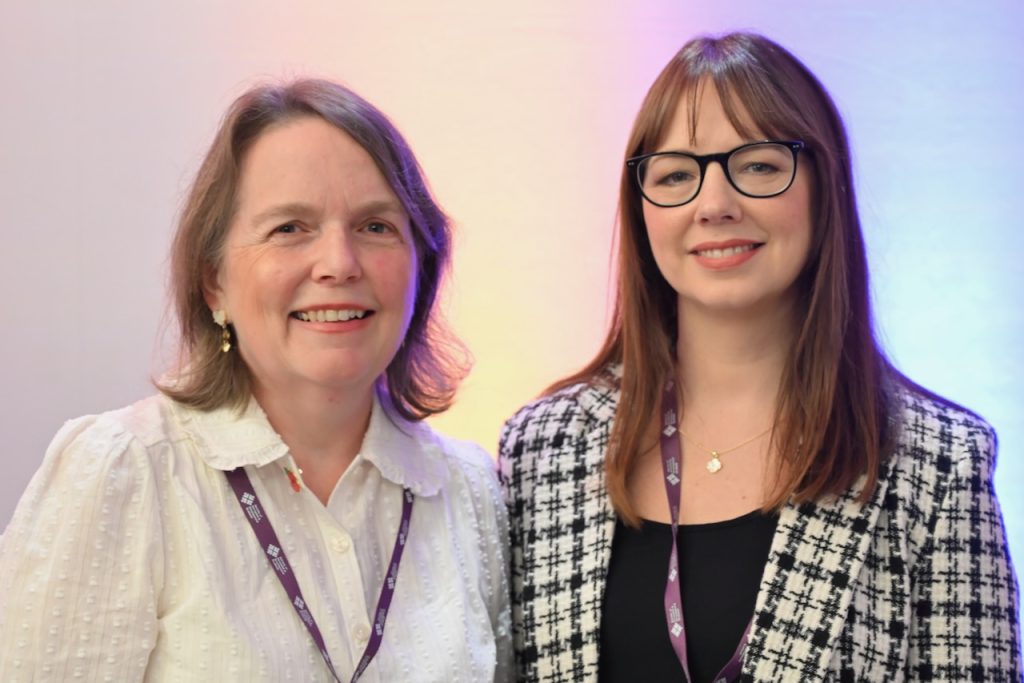
Sally Hopper with SPDS President, Claire Wallace
Pictures by Stuart Bain
_______________________________________________________________________________________________________________________
Blog by Katie Jacobs, an award-winning freelance journalist, writer and editor, who specialises in writing about the world of work. She was previously Editor of HR Magazine and Senior Stakeholder Lead at the CIPD.
0 Comments