

In challenging times, compassionate leadership and collective action is needed more than ever. That’s what SPDS Annual Conference attendees heard from Professor Michael West, Professor of Work and Organisational Psychology at Lancaster University, and an internationally recognised expert in leadership, culture and team performance, particularly in healthcare.
In a thought-provoking keynote on the courage of compassion, Professor West stressed that aiming to build more compassionate and inclusive cultures in local government isn’t about “twiddling dials or rearranging the deckchairs on the Titanic: this is about how we transform our public service organisations so that they’re models of the kind of communities we want our society to be.”
He shared six elements that compassionate, collective and inclusive cultures have in common:
- A clear vision
- Clear goals cascading down from that vision
- A culture of learning and innovation
- Support and caring for staff and citizens
- Equity and inclusion for all
- Engaging and collaborative, including inter-team and inter-organisation working
He also cited studies that prove compassionate approaches in healthcare improve patient outcomes, as well as studies on the positive impact of staff engagement on patient care, with compassionate leadership being the most powerful driver of engagement. “Compassion is the single most powerful intervention we have available to us in healthcare, and this applies across public service organisations,” he said. “The challenge for us is: how do we create the conditions within our organisations?”
The answer is leadership. “The single most important factor in shaping culture is the leadership of our organisations – what leaders pay attention to, focus on, talk about and model in their behaviours tells us what they value. If we are to create more compassionate culture, then leaders must embody compassion in their leadership.”
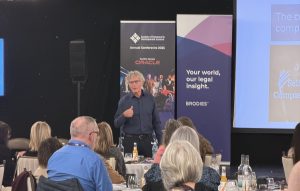
There are four key elements of compassionate leadership, Professor West explained. These are:
- Attending: Being present with those we lead and “listening with fascination”
- Understanding: Listening deeply and taking time to truly understand the challenges those we lead face in their work
- Empathising: feeling the strains, pains, anxieties and frustrations of those we lead without being overwhelmed, boosting motivation to help
- Helping: Removing obstacles and giving those we need the resources to achieve their goals
“The most important skill of a leader is listening to those that we lead and the most important task of a leader is helping those we lead to do their jobs more effectively by removing the obstacles or ensuring they’ve got the resources,” Professor West said. He stressed that compassion was about dealing with difficult behaviour head-on rather than avoiding confrontation, “leaning into pain and difficulty, not pulling away”.
When it comes to bringing the four elements of compassionate leadership to life, they translate into four pillars:
- Effective Leadership
- Inclusive Leadership
- Collective Leadership
- Systems Leadership
On Effective Leadership, Professor West cited the Center for Creative Leadership’s DAC model. This says that effective leadership requires Direction (a clear, shared vision and agreed, challenging goals), Alignment (ensuring everyone’s efforts are aligned around that direction) and Commitment (developing trust and motivation).
Inclusive Leadership means having a clear, shared inspiring purpose or vision, positively valuing difference, committing to equality and inclusion. and having clear roles. Collective Leadership involves everyone having shared leadership responsibility, with “expertise correlating with airtime” and a lack of rigid hierarchies.
Systems leadership is working effectively across boundaries, with shared vision and values and long-term objectives. Spending time together in person and building and improving relationships matters immensely, Professor West said. “The more contact we have across boundaries, the more we improve relationships and have a sense of shared purpose.”
He urged those present to work together collectively to solve four “wicked problems”:
- How can we address the problem of chronic, excessive workload that is so damaging to staff health and wellbeing, public services, and staff retention?
- How can we move effectively from command-and-control hierarchies to team-based, empowered, and cross-boundary working?
- How can we create the space for staff to meet, discuss, and generate solutions for the most difficult problems we face?
- How can we truly liberate teams to innovate and feel safe to do so?
“If we’re not doing that, we are just shifting deckchairs,” he added.
Focusing on team effectiveness is vital to success, and Professor West shared a number of evidence-based interventions for improving teamwork, including a study that found teams that take time out on a regular basis for debriefs and after-action reviews are between 35 and 40% more productive. “Can you imagine any other intervention in your organisation that would lead to a 35 to 40% increase? Stopping and taking time out to reflect… [means] they innovate as a consequence.”
He added that the most significant issue he sees in public sector teams is a lack of agreement on having five or six clear challenges. Having more priorities means that people “don’t know what’s important any more”, he warned, adding: “Part of our collective responsibility is to educate those in our organisations about what good goal setting means. It means having a limited number of priority goals and making sure those goals are agreed rather than imposed.”
Ultimately, Professor West reflected, creating the right conditions, those of compassionate leadership, will drive success, for the organisation and those it serves. “If we create the right conditions in our organisations, 99.9% of people will perform brilliantly,” he said. “We don’t need to do lots of performance management or target setting if we create the right conditions.”
Many thanks to Brodies for sponsoring this session.

SPDS Executive Member, Jane Fowler, Professor Michael West and Lynne Marr, Partner at Brodies
Blog by Katie Jacobs, an award-winning freelance journalist, writer and editor, who specialises in writing about the world of work. She was previously Editor of HR Magazine and Senior Stakeholder Lead at the CIPD.
0 Comments