

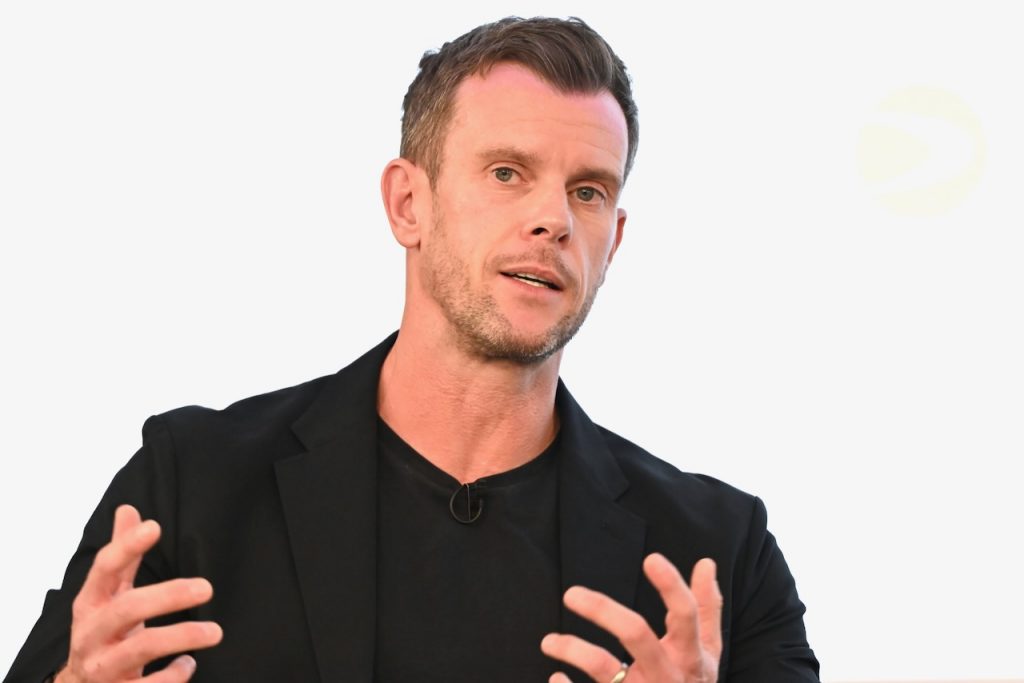
If anyone knows how to support high-performing individuals and lead high-performing teams, it’s UK Davis Cup Team Captain Leon Smith. One of the most successful British tennis coaches of recent times, Smith has been Captain of the Davis Cup Team since 2010.
When Smith took over, the team was on the brink of relegation to the lowest tier of the competition and ranked 44th in the world. Five years later, the team won their first Davis Cup title in 79 years and had reached number one in the world rankings. In recognition of his work, Smith was awarded an OBE for services for tennis in 2016.
Speaking to SPDS conference attendees in a intimate and inspiring fireside chat with CIPD Chief Executive, Peter Cheese, Smith shared how he’d almost not taken the job as Davis Cup Team Captain, after being hit with by imposter syndrome. “I turned it down through fear,” he admitted, of initially saying no to the role, thinking people might think he’d only been offered it due his previous work as Andy Murray’s coach in the early stages of his career. It was Judy Murray who persuaded him to change his mind, telling him he had the personality and coaching skills to turn the team around, and that the only way was up. The rest, of course, is history.
Here are five leadership lessons Smith shared from the world of elite sport, that are applicable to anyone leading in organisations today.
1. You’re only a leader if people follow you
With less of a track record in playing tennis at an international level than previous holders of the role, Smith was acutely aware that he would need to focus on his people and coaching skills, and surround himself with others who brought strengths he didn’t possess.
“I presented myself to the players by understanding my strengths and the areas I didn’t have,” he said. “And I surrounded myself with some coaches who had a track record that I could lean on. I was aware that my people skills were my selling point.”
He knew that he needed to find a way to get people to follow him as “you’re only a leader if people follow you”, and so he focused on team culture, building a sense of pride in representing Great Britain in tennis. Smith also focused on getting to know his players “unbelievably well” and playing to his strengths in building relationships.
2. Build up credits in the relationship bank
Speaking of relationships, Smith was clear that much of his success comes down to the relationships he has with his players, colleagues and direct reports. He spoke of the importance of “building up credits” when it comes to relationships, as there will inevitably be times where you have to deliver bad news or unwelcome messages. Coming into these challenging conversations from a place of trust and mutual respect will make all the difference.
“I’ve always tried to build up those credits in the bank by spending time getting to know people, being genuine, being factual, being honest,” he said. That means when he has to have a difficult conversations – about a player being deselected from the team, for example – the relationship is not destroyed: “I can build it back up because of what’s been put in before. And that’s really important.”
However, Smith also emphasised that this isn’t about being “best friends” with people, quoting football manager Jurgen Klopp who told the Diary of a CEO podcast of his players: “I want to be their friend but not their best friend.” “It’s a difficult balance,” Smith added, admitting he had made mistakes in the past. “I learned a lot and now I keep a healthy distance,” he said.
3. Don’t shy away from difficult conversations
One of the most important leadership lessons Smith has learned is to accept that you will need to have difficult conversations – and to learn how to deliver them. “I don’t enjoy doing that,” he said. “It never becomes easy, but I find they do become easier the more you do.”
He added that in the early days of his job as team captain, he would sometimes avoid having challenging discussions, but quickly learned this only makes things worse. “If you leave it until you really have to, it makes it much worse,” he shared, advising leaders to instead nip things in the bud.
Smith also advised leaders and managers to ensure they prepare for such conversations. In his world, he often speaks to sports psychologists about how to approach situations and conversations, even role playing and scripting how they might go.
“You have to accept that relationship is a bit damaged, but you’ve also got to be brave enough and bring compassion and empathy,” he said, reflecting on how difficult it can be to tell players that they haven’t been selected. The most important thing is to be honest, share your reasoning and then “rebuild”, he said.
4. Treat people as individuals – but equalise where you can
Key to success in leadership is recognising and treating people as individuals, while striving to provide an equal playing field for all. “We always talk about equalising, but, at the same time, everyone is different,” Smith explained.
A pertinent example is having a “superstar” like Andy Murray within the team. “I was very conscious of having a superstar, but made everyone feel that they were on a similar level,” he said. That meant in practice, he added, ensuring training sessions times were equitably distributed, rather than star players always being given the preferred times.
When it comes to having challenging conversations, Smith said knowing how to approach them with individuals was key. While he was more direct with some players (including Murray), more introverted players required a different approach, such as going for a walk to deliver hard news with less direct eye contact. “It’s about understanding who you are dealing with in that situation and thinking about what environment is best to deliver that message,” he said.
5. Play to strengths: your own and other people’s
In addition to treating people as individuals, Smith stressed the need to take a strengths-based approach to leadership – when it comes to your own strengths and those of other people. He advised the HR leaders in the audience to identify the four or five things that make them great, and to help others do the same.
It comes back to his first days in the job, where he identified his ability to build relationships, coach and connect with others as key differentiating factors. Executive coaching in the years since has helped him build his self-awareness, both of his strengths and areas to work on.
“You’ve got to be aware of the people you’re working with and the people you’re around,” he said. “I know it’s one of my strengths.” It’s also, he concluded, a huge part of what makes the HR profession matter even more in an AI-driven world. “It’s all about people: you’ve got to play on that strength,” he told the audience.


Thanks to myjobscotland for sponsoring this session.
Blog by Katie Jacobs, an award-winning freelance journalist, writer and editor, who specialises in writing about the world of work. She was previously Editor of HR Magazine and Senior Stakeholder Lead at the CIPD.
0 Comments